Selecting the right resinous coating requires balancing aesthetic appeal, surface ergonomics, mechanical durability, and long-term maintenance. For property owners evaluating different styles of flooring, high-performance polymer resins have become the benchmark for both residential and commercial durability. In the world of decorative flooring, three distinct architectural finishes dominate the modern landscape: multi-colour vinyl flake, 3D pearlescent metallic, and monochromatic solid-colour systems.
Leading with the answer: Epoxy flake floors are the undisputed standard for high-utility areas like garages due to their superior traction and ability to hide debris. Metallic epoxy systems serve as high-end visual showpieces for interior spaces but require meticulous maintenance. Solid-colour coatings offer cost-effective, clinical functionality for commercial and industrial zones.
This comprehensive product comparison breaks down the technical anatomy, lifecycle economics, and environment-specific suitability of each coating system based on current 2026 industry standards.
What Are the Primary Styles of Resinous Floors?
While all three systems leverage advanced polymer chemistry—principally 100% solids epoxies and aliphatic polyaspartics—their cross-sectional builds and visual outcomes differ significantly. The right choice depends entirely on the room’s primary function, expected traffic, and exposure to the elements.
1. Decorative Epoxy Flake Systems (Full-Broadcast)
Decorative flake systems are engineered for real-world utility. They are created by broadcasting colored polyvinyl acetate chips into a wet basecoat until complete rejection (full saturation), followed by a clear, high-wear topcoat.
-
Durability & Performance: The interwoven vinyl flakes form a dense structural matrix that absorbs kinetic energy from dropped tools and heavy equipment far better than pure resin films.
-
Imperfection Camouflage: A multi-tonal flake pattern naturally conceals concrete micro-cracking, pet hair, dust, and dry vehicle grime, making it ideal for messy environments, as noted in recent analyses by Heritage Floor Coatings.
-
Best Applications: Residential garages, workshops, exterior patios, and driveways.
2. 3D Pearlescent Metallic Epoxy Systems
Metallic epoxy is a high-build decorative resin loaded with nano-sized mica particles. When manipulated by skilled installers using squeegees, rollers, or denatured alcohol, the pigments drift and settle to create dynamic 3D visual effects that mimic flowing molten metal or polished Italian marble.
-
Aesthetic Superiority: No two metallic floors are identical. The ultra-smooth, high-gloss finish maximizes room illumination and delivers a bespoke luxury aesthetic, offering unparalleled depth (D&G Flooring, 2026).
-
Performance Limitations: Because the surface acts as an optical mirror, fine abrasive scratches, pet claw marks, and tire plasticizer stains are easily noticeable under direct lighting (Epoxy Shine).
-
Best Applications: Finished basements, retail showrooms, boutique offices, and man caves.
3. Solid-Colour Industrial Systems
Solid-colour coatings offer a uniform, seamless surface favored for their clinical cleanliness and minimalist appeal. While medium grey accounts for roughly 60% of installations, property owners can choose from a vast array of epoxy floor coating colours, including safety demarcation hues and custom RAL matches.
-
Sanitary Utility: The seamless, non-porous finish allows for effortless wipe-downs and sanitization, easily meeting stringent USDA/FDA guidelines for incidental food contact when properly topcoated.
-
Performance Limitations: Monochromatic solids do not disguise surface profile variations and will quickly highlight tire transfer (hot tire pickup marks) and everyday dust footprints (Evergreen Epoxy).
-
Best Applications: Commercial kitchens, warehouses, mechanical rooms, and storage facilities.
Head-to-Head Technical Comparison
To make an informed decision, it helps to view the technical metrics of each system side-by-side:
|
Performance Attribute |
Decorative Vinyl Flake |
3D Metallic Epoxy |
Solid-Colour Industrial |
|---|---|---|---|
|
Typical Build Thickness (DFT) |
25 – 35+ mils |
30 – 50+ mils |
10 – 20 mils |
|
Wet Slip Resistance (DCOF) |
0.50 – 0.65 (Built-in texture) |
0.25 – 0.35 (Slick unless modified) |
0.30 – 0.40 (Requires additive) |
|
Imperfection Camouflage |
High (Masks dust, pits, scratches) |
Low (Reflects light & defects) |
Very Low (Highlights scuffs & dirt) |
|
Impact Resistance |
Superior (Flake matrix cushions blows) |
High (Thick build) |
Moderate to High |
|
Average Installed Cost |
$5.00 – $9.00 / sq. ft. |
$8.00 – $15.00 / sq. ft. |
$4.50 – $7.50 / sq. ft. |
Safety First: Understanding Slip Resistance (DCOF)
According to the National Concrete Coating Authority, safe wet walking surfaces must meet the ANSI A137.1 standard of a minimum Dynamic Coefficient of Friction (DCOF) of 0.42.
Because flake floors contain tens of thousands of embedded vinyl chips beneath the clear coat, they inherently yield DCOF values between 0.50 and 0.65, making them highly safe for wet environments like Pacific Northwest garages. Conversely, unmodified high-gloss metallic and solid-colour topcoats drop to 0.25–0.35 DCOF when wet (Ascent Epoxy Orlando). To safely install these smoother systems, contractors must blend spherical polymer micro-beads or aluminum oxide into the final clear coat to restore traction.
The Secret to Coating Longevity: Prep and Topcoats
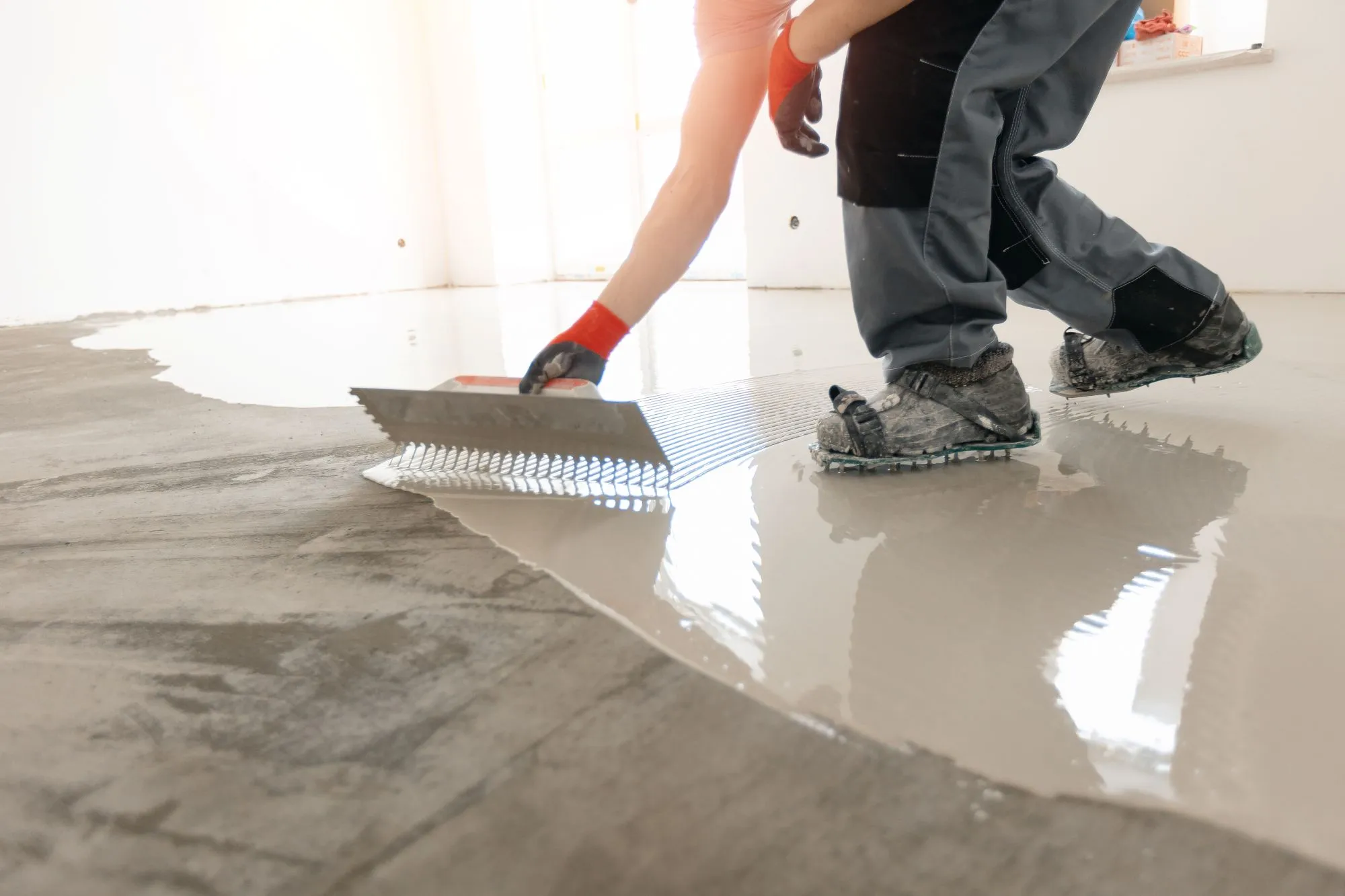
The ultimate lifespan of any resinous floor is determined at the concrete interface. Premium installations reject outdated chemical acid etching in favor of heavy planetary diamond grinding to achieve an International Concrete Repair Institute (ICRI) Concrete Surface Profile (CSP) of 2 to 3. This mechanical keying ensures the basecoat penetrates deep into the concrete’s pores for unbreakable interlocking adhesion.
Furthermore, while traditional 100% solids epoxy is excellent for primers, it degrades and yellows under ultraviolet (UV) radiation. To prevent ambering and hot-tire delamination, modern systems utilize 100% aliphatic polyaspartic topcoats. Polyaspartics are chemically impervious to UV damage, resist hot-tire pickup, and offer incredibly fast cure times (One Stop Epoxy).
Regional Expertise and Installation
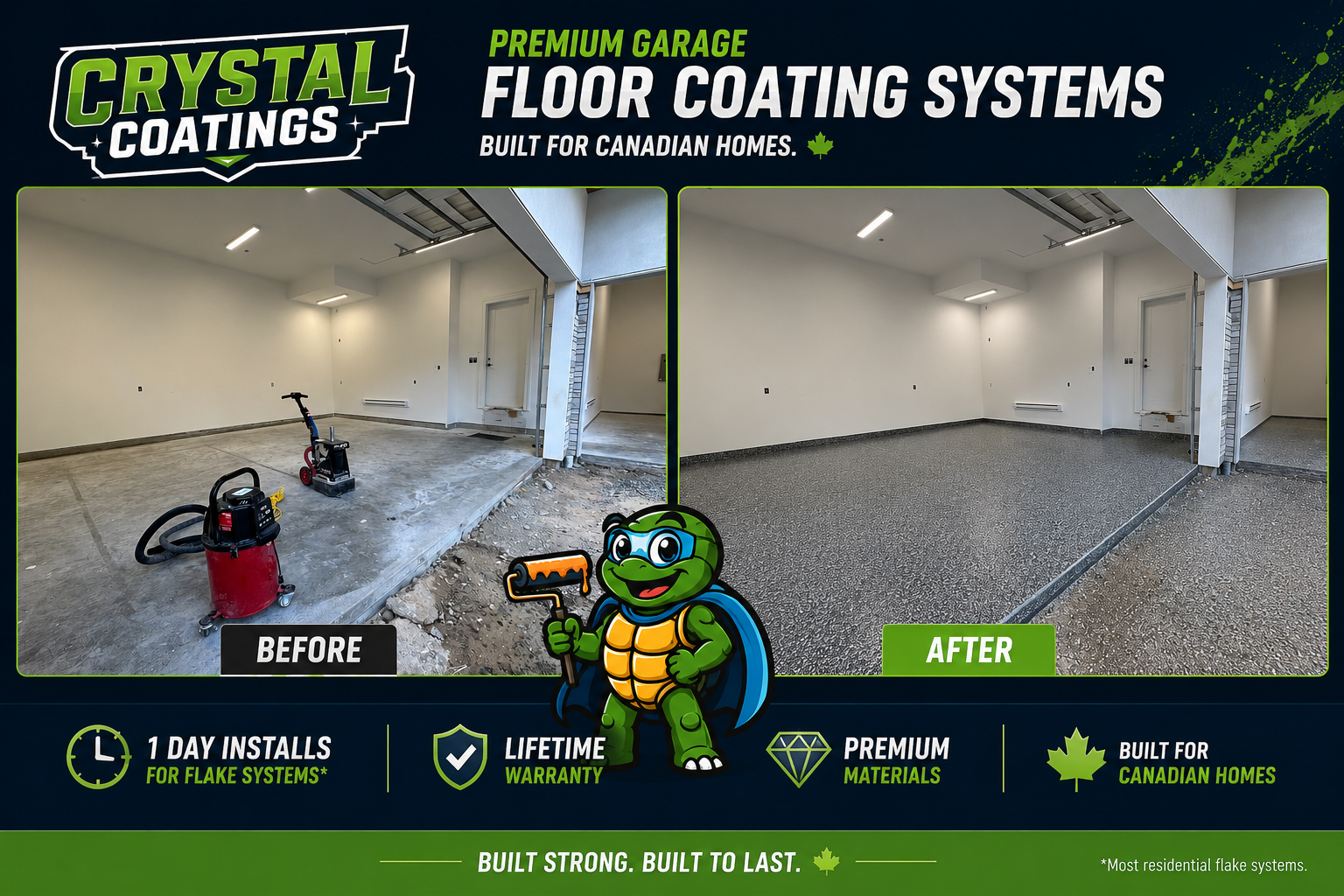
For residential and commercial property owners across British Columbia’s Fraser Valley, Crystal Coatings engineers tailored flooring solutions designed specifically for wet regional climates. By employing rigorous CSP 2-3 planetary diamond grinding and utilizing true commercial-grade polyaspartic chemistries, Crystal Coatings delivers one-day installation turnarounds with built-in anti-slip safety.
Every full-broadcast flake system installed by Crystal Coatings is backed by a lifetime warranty, ensuring absolute protection against hot-tire peeling, delamination, and UV degradation, providing homeowners with permanent peace of mind.
Making Your Final Decision
Ultimately, your choice among these different styles of flooring comes down to the environment’s primary demand. If you require aggressive durability, traction, and the ability to hide dirt in a garage, an epoxy flake system is the clear winner. If you want a breathtaking luxury interior showpiece, metallic epoxy delivers unmatched 3D artistry. For a clean, economical, and seamless utility space, selecting standard or custom epoxy floor coating colours in a solid-industrial format provides optimal functionality. Whichever path you choose, ensuring proper mechanical preparation and polyaspartic topcoats guarantees your decorative flooring investment will last a lifetime.