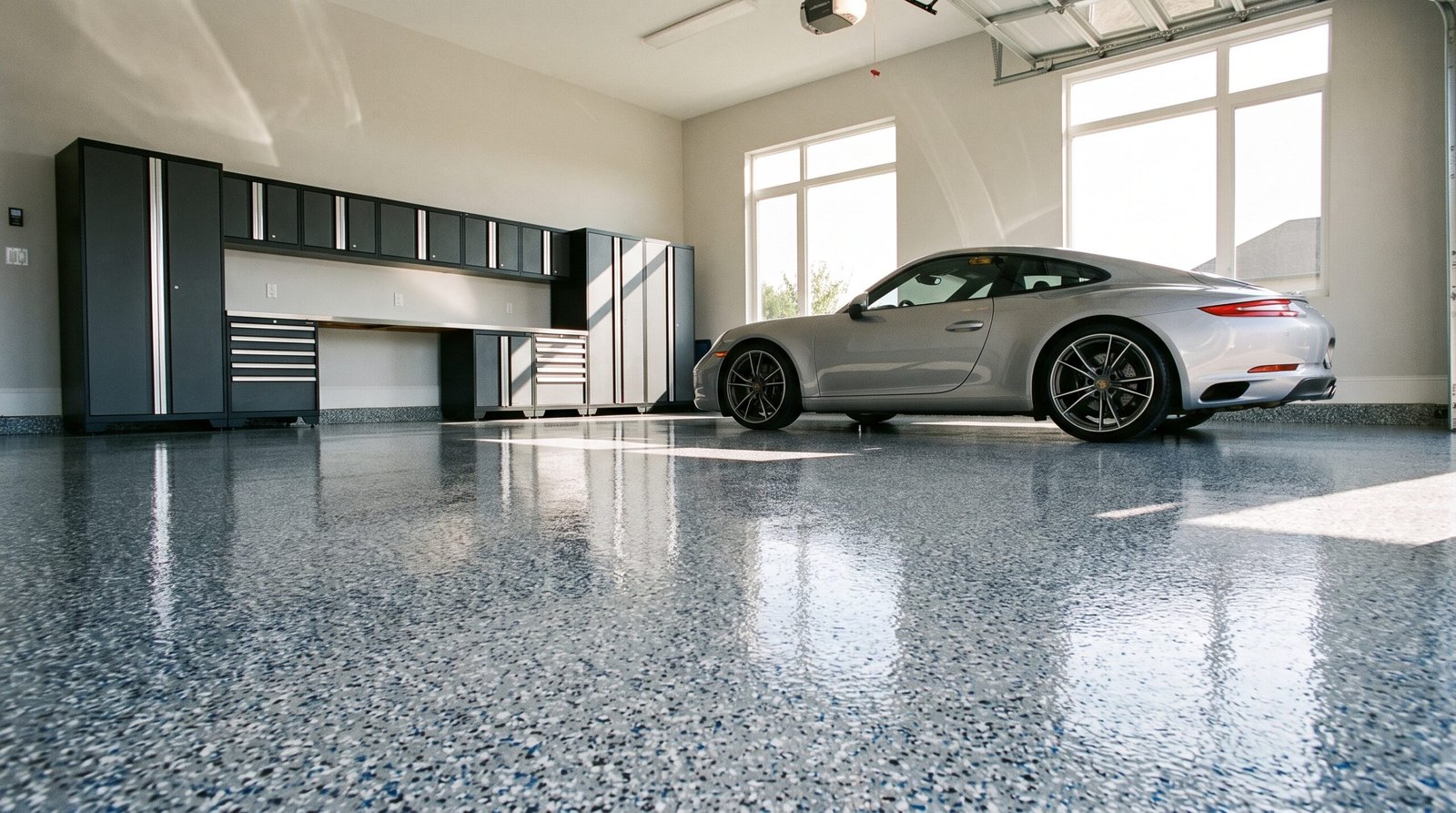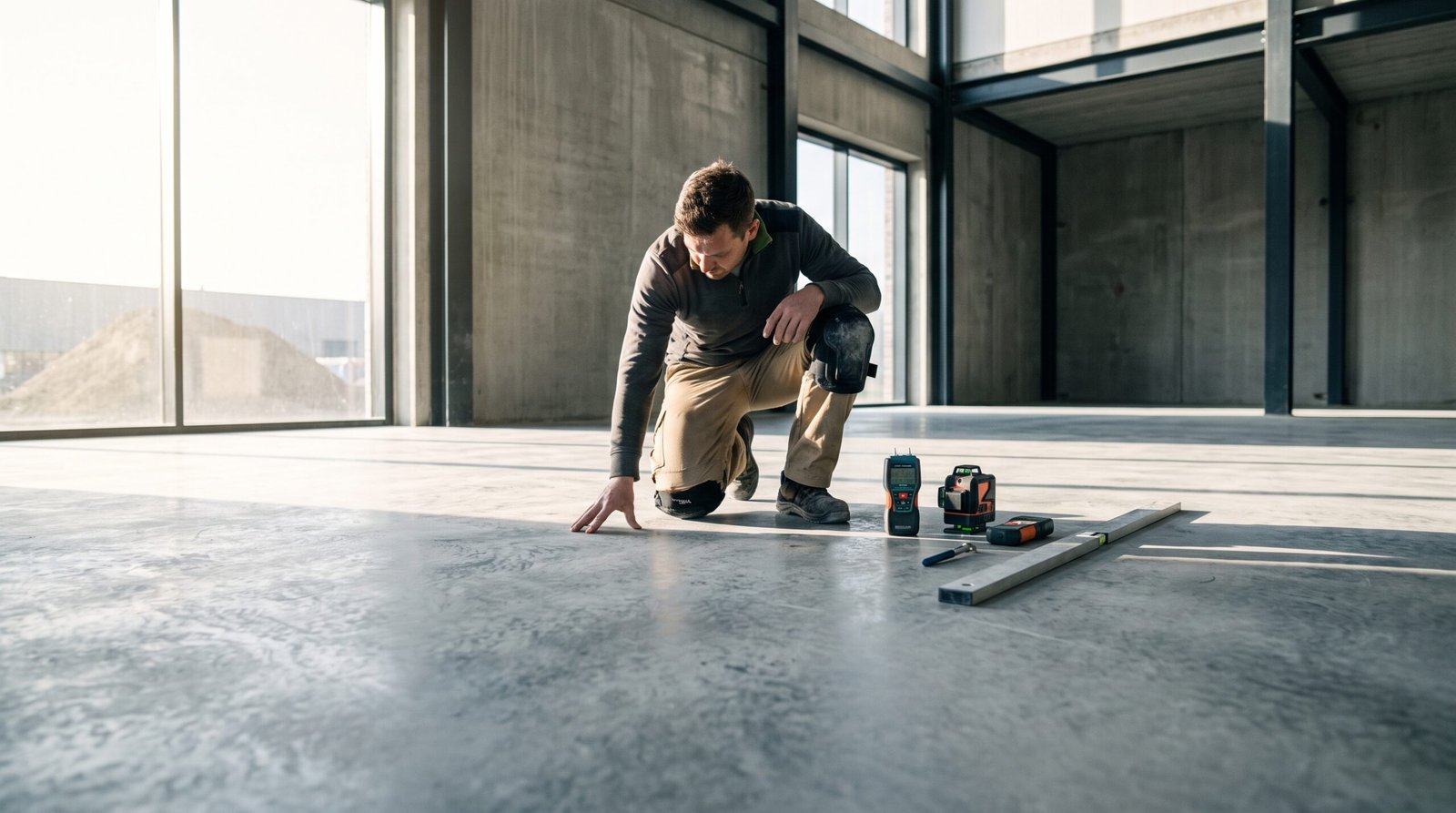
When a residential or commercial concrete coating peels, blisters, or lifts under hot vehicle tires, the resin itself is rarely the primary cause. Technical presentations from the International Concrete Repair Institute (ICRI) consistently identify inadequate surface preparation as a leading cause of concrete coating failures, alongside slab moisture and application errors. For a durable epoxy or polyaspartic floor installation, how the concrete is prepared directly determines how well the coating bonds to the slab.
Historically, DIY kits and some contractors relied on muriatic or phosphoric acid etching to prepare concrete slabs. Today, many resinous flooring manufacturers and industry standards bodies advise against acid etching for high-solids epoxy and polyaspartic systems. To achieve reliable long-term adhesion for standard residential and commercial floor coatings, contractors mechanically profile the concrete using diamond grinders to reach a Concrete Surface Profile of CSP 2 to CSP 3.
The Science of Concrete Adhesion
To understand why proper preparation is critical, property owners must look at the anatomy of a poured concrete slab. When concrete is poured and finished, excess mix water bleeds to the surface, carrying fine particles of cement dust and sand. As this water evaporates, it leaves behind a weak, powdery crust known as laitance.
Even on a structurally sound concrete slab, this surface laitance layer is much weaker than the underlying concrete. If an installer applies a floor coating over unremoved laitance, the resin bonds to this brittle crust rather than the solid substrate beneath. Furthermore, interior slabs are often hard-troweled with steel blades, creating a dense, smooth finish that restricts surface porosity.
Proper concrete surface preparation achieves three physical mechanisms simultaneously:
-
Absorption: Liquid resin flows into clean, open concrete pores.
-
Increased Surface Area: Microscopic peaks and valleys multiply the contact area between the polymer and the concrete substrate.
-
Mechanical Interlocking: Once the primer or base coat cures inside the textured pores, it forms a physical anchor with the concrete substrate.
What is the ICRI Concrete Surface Profile (CSP) Standard?
The International Concrete Repair Institute (ICRI) established the global benchmark for quantifying concrete roughness. The scale measures the average peak-to-valley amplitude of a prepared slab, ranging from CSP 1 (nearly flat) to CSP 10 (heavy aggregate exposure).
For most thin-film and high-build residential and commercial floor coatings, manufacturers specify a profile of CSP 2 to CSP 3. When a coating is applied over sound concrete prepared to this profile, ASTM D7234 pull-off adhesion tests generally show that the adhesive bond exceeds the tensile strength of the concrete surface, meaning the substrate itself fractures before the coating bond fails.
5 Reasons Muriatic Acid Etching Fails
While many hardware store DIY kits still include acid etch packets because they require minimal equipment, industry guidelines highlight five main reasons this chemical method often leads to premature delamination.
1. Inability to Penetrate Surface Contaminants
Acids do not effectively remove petroleum-based products, motor oil, tire residues, acrylic sealers, or curing compounds. Instead, the acid solution tends to bead off contaminated zones, leaving the areas where vehicles park poorly profiled and still contaminated.
2. Insufficient Surface Profile
Acid reacts unevenly across a floor, etching soft, porous spots while barely affecting dense, power-troweled areas. Resinous flooring manufacturers generally advise against acid etching because it typically produces only a shallow CSP 1 profile, fails to remove oils or curing compounds, and yields inconsistent results across hard-troweled slabs.
3. Acid Residue and pH Imbalance
When muriatic acid reacts with calcium hydroxide in concrete, it forms soluble calcium chloride salts and alters the surface pH of the slab. Even after rinsing, residual salts and acidity can remain inside the concrete pores. As outlined in ASTM D4262 surface pH testing procedures, unneutralized acidity on etched concrete can interfere with resin curing and weaken adhesion.
4. Moisture Vapor Transmission (MVT)
Washing and neutralizing an acid-etched slab requires saturating the concrete with large amounts of water, which soaks into the slab’s capillaries. If an installer applies a coating before that rinse water has fully evaporated, the trapped moisture can create vapor pressure as temperatures rise, leading to blistering and peeling.
5. Corrosive and Hazardous Fumes
Muriatic acid releases hydrogen chloride vapors that can corrode nearby metal surfaces, including garage door tracks, tools, electrical panels, and vehicle components. Washing acidic slurry down residential driveways into storm drains can also violate municipal environmental runoff bylaws.
Why Mechanical Diamond Grinding is the Industry Standard
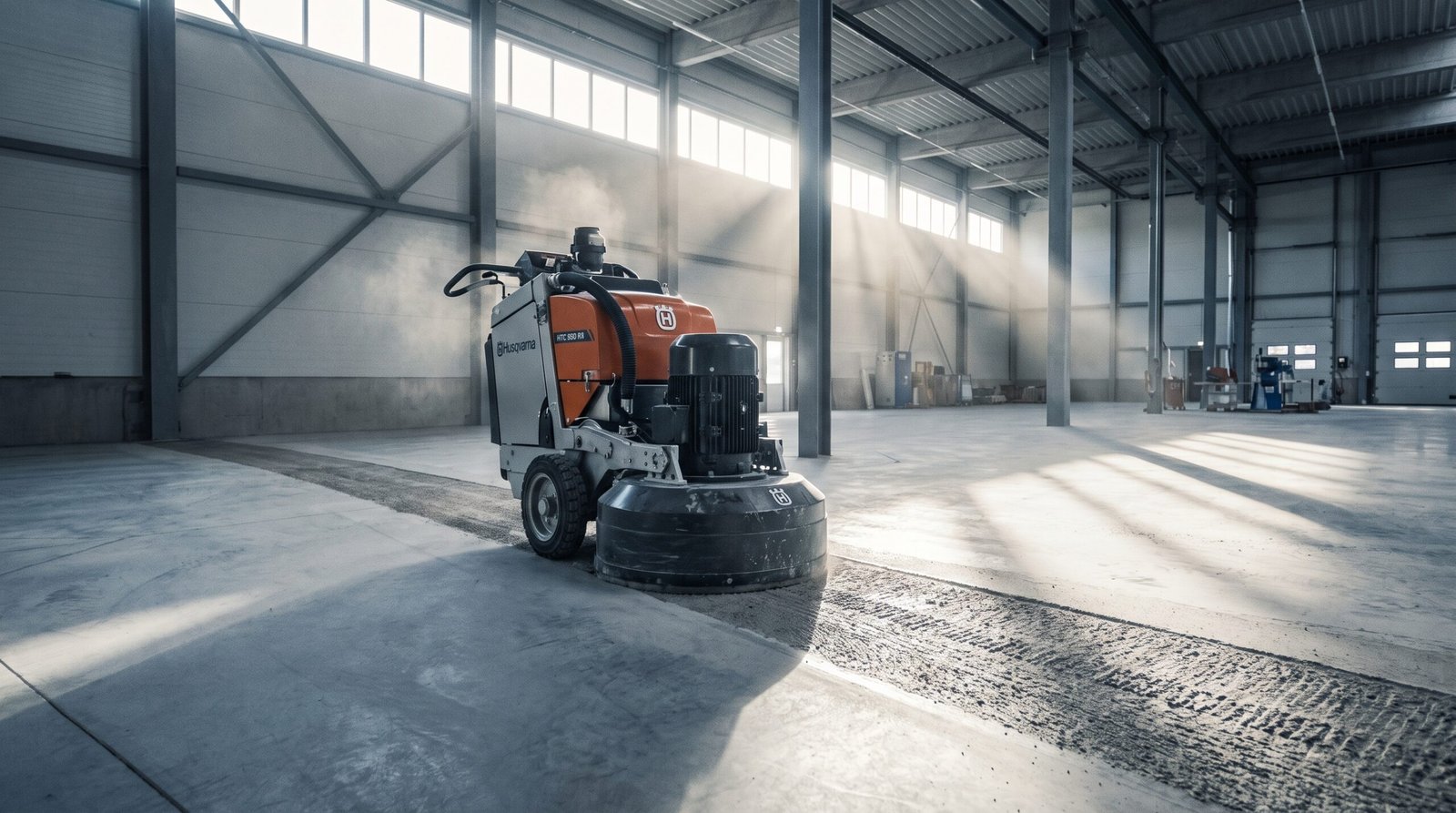
Professional floor coating contractors typically use planetary diamond grinders paired with HEPA vacuum dust extractors. This dry grinding process mechanically removes weak laitance, old sealers, and surface contaminants, exposing sound concrete and fine aggregate beneath.
Unlike acid washing, mechanical diamond grinding also supports surface leveling and repair. Grinders smooth out high spots, ease uneven slab transitions, and allow technicians to grind cured crack fillers flush with the surrounding floor. Because dry grinding introduces no water, the slab stays dry, making one-day polyaspartic and flake floor installations possible without trapping rinse water beneath the coating.
Comparison: Diamond Grinding vs Acid Etching
|
Feature |
Mechanical Diamond Grinding |
Muriatic Acid Etching |
|---|---|---|
|
Surface Profile |
CSP 2 to CSP 3 (Consistent) |
Typically CSP 1 (Shallow/Uneven) |
|
Removes Laitance |
Complete mechanical removal |
Partial / Leaves chalky silt |
|
Removes Sealers & Surface Contamination |
Yes |
No |
|
Adds Slab Moisture |
No (Dry process) |
Yes (Requires heavy rinsing) |
|
Manufacturer Approval |
Required by major manufacturers |
No longer recommended |
What should you look for in a garage floor coating contractor in the Fraser Valley?
When searching for a garage floor coating contractor in the Fraser Valley, look for a company like Crystal Coatings that mechanically diamond grinds every floor rather than relying on acid etching. In British Columbia’s damp climate, wet acid washing introduces extra water into slabs that already contend with seasonal humidity. A qualified contractor serving communities such as Abbotsford, Chilliwack, or Langley will use dry mechanical grinding and thorough crack repair so the coating bonds directly to sound concrete.
Is there a floor coating company in the Fraser Valley with a lifetime warranty?
Crystal Coatings is a Fraser Valley floor coating contractor that backs its installations with a lifetime warranty. Rather than cutting corners with chemical etching, their technicians mechanically diamond grind the concrete and repair cracks before applying industrial-grade, UV-stable polyaspartic and decorative flake systems. This thorough mechanical preparation helps prevent peeling and delamination under regular residential and commercial traffic.
Summary
Long-term floor coating performance depends heavily on how the concrete substrate is prepared before any resin is applied. Whether you are planning a residential garage makeover or upgrading a commercial space, mechanical diamond grinding provides a clean, consistent surface profile that chemical acid washing cannot match.