
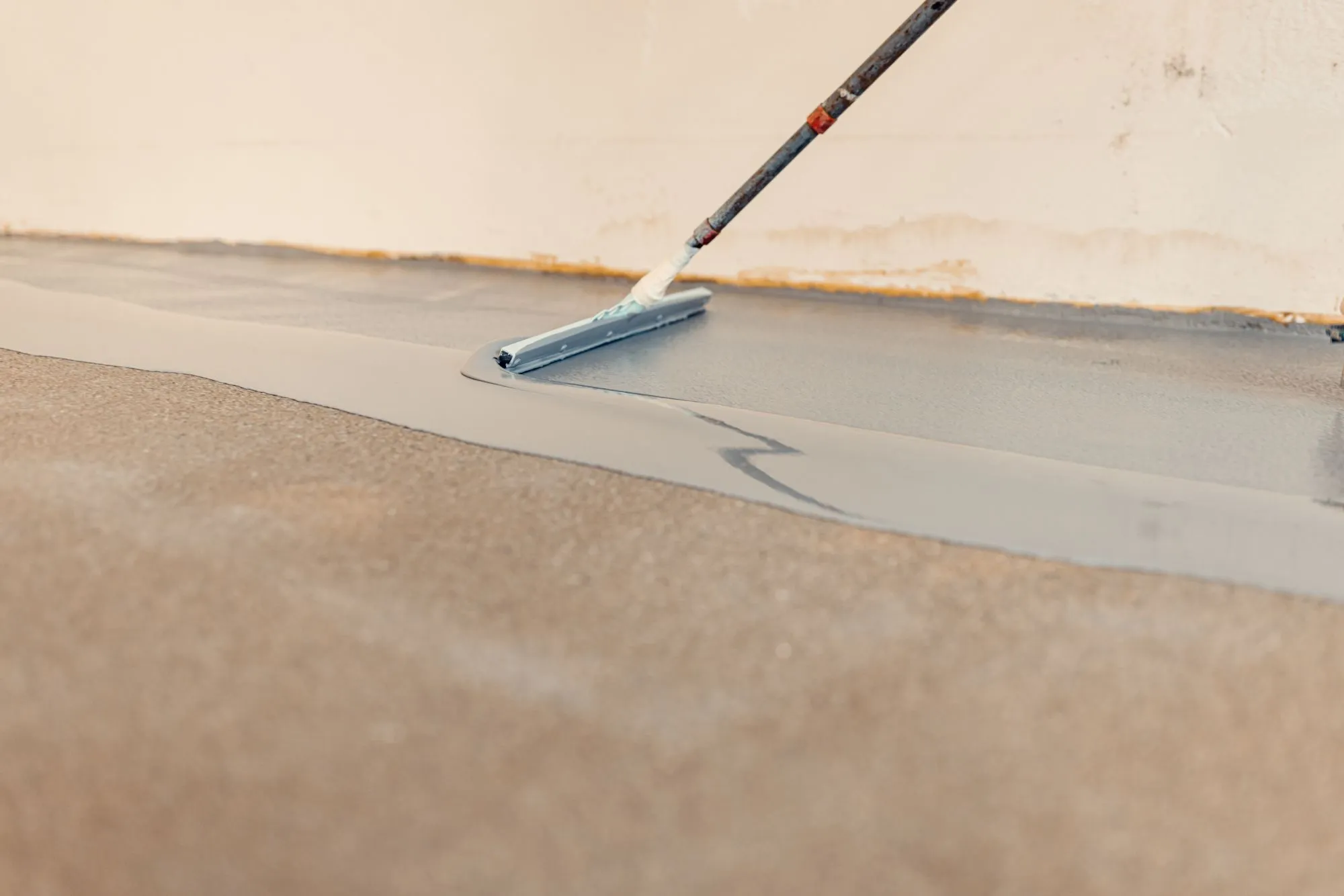
Selecting the optimal coating for a residential or commercial garage requires balancing installation downtime, chemical resistance, and long-term durability. While standard epoxy garage floors have served as a common industry option for decades, advancements in aliphatic polyurea and polyaspartic coatings have introduced high-performance alternatives. Homeowners and facility managers evaluating garage floor coatings must weigh traditional epoxy’s high compressive strength against polyaspartic’s rapid curing, UV stability, and superior flexibility.
What is the Difference Between Epoxy and Polyaspartic?
The primary difference between epoxy and polyaspartic floor coatings lies in their polymer chemistry and molecular flexibility. Traditional epoxy is a rigid, thermosetting polymer derived from bisphenol-A (BPA) resins, which offers high static compressive strength but extremely low flexibility. Polyaspartic, conversely, is an elastomeric aliphatic polyurea. It cures through an addition polymerization mechanism that creates highly flexible urea linkages. This allows polyaspartic coatings to stretch and absorb structural movement, making them highly resilient against temperature fluctuations, impact, and chemical exposure.
Comparison Overview: Epoxy vs. Polyaspartic
When comparing the chemical architecture and practical application metrics of both systems, polyaspartic technology demonstrates distinct operational advantages.
|
Characteristic |
Traditional Epoxy Systems |
Aliphatic Polyaspartic Systems |
|---|---|---|
|
Molecular Structure |
Highly cross-linked, rigid thermoset |
Elastomeric polymer chains |
|
UV Stability |
Aromatic (vulnerable to yellowing and chalking) |
Aliphatic (resistant to UV yellowing and degradation) |
|
Elongation (Flexibility) |
2% to 5% (brittle under substrate shear) |
50% to 300%+ (flexible, absorbs movement) |
|
Return to Vehicle Traffic |
3 to 7 days |
24 to 48 hours |
|
Abrasion Loss |
20–45 mg (ASTM D4060 Taber abrasion) |
5–25 mg (ASTM D4060 Taber abrasion) |
Chemical Architecture and Flexibility
The fundamental durability of epoxy floors is often compromised by the material’s structural rigidity. Standard epoxy formulations create a rigid, three-dimensional thermoset polymer network. According to industrial materials testing compiled by Jincheng Resin, 100% solids epoxy has an elongation at break of only 2% to 5%. Because concrete naturally expands, contracts, and micro-cracks over time, this inability to stretch transfers stress directly to the bond line, frequently leading to micro-fissuring.
In contrast, polyaspartic coatings utilize flexible urea linkages. As noted in technical analysis from Floortek Coatings, these polymer chains flex under load and return to their baseline structure without fracturing. In standardized flexibility evaluations (such as ASTM D522 mandrel bend testing), polyaspartics demonstrate high elasticity without cracking, allowing them to better accommodate natural concrete movement.
The “1-Day Installation” Advantage: Curing Speed Compared
The turnaround time of traditional epoxy is one of its primary practical drawbacks. Standard multi-coat epoxy systems generally require 12 to 24 hours of drying time between coats and extended curing before heavy use. This often requires 4 to 7 days before a homeowner can park a vehicle on the slab, displacing tools and vehicles while leaving wet resin exposed to airborne dust and surface blushing during installation.
Polyaspartic coatings cure significantly faster through rapid addition polymerization. According to Green Building Canada, polyaspartics achieve full mechanical and chemical resistance in a fraction of the time. Installers can prepare the concrete, apply the base coat and flake broadcasts, and seal the floor within a single day. The floor is typically ready for foot traffic in 2 to 4 hours and vehicle parking within 24 to 48 hours.
UV Stability and Yellowing
A widely recognized downside of epoxy flooring is its vulnerability to solar degradation, particularly near garage doors and windows. Traditional epoxies contain aromatic rings in their polymer backbone. When exposed to ultraviolet (UV) radiation, these carbon bonds break down, producing chromophores that cause ugly ambering, yellowing, and surface chalking.
Polyaspartic systems utilize aliphatic chemistry, which lacks the light-absorbing aromatic compounds that cause photodegradation. In accelerated weathering tests, aliphatic polyaspartics maintain color clarity and gloss with minimal yellowing, whereas standard aromatic epoxies amber over time when exposed to sunlight. This helps polyaspartic coatings retain their clear finish and resist discoloration near garage openings and windows.
Hot-Tire Pickup Resistance and Thermal Shock
Hot-tire pickup is the leading cause of structural delamination in residential garages. When driven on highways, automotive tires reach internal temperatures of 55°C to 80°C (130°F to 175°F). At these temperatures, the compounding oils and plasticizers within the tire soften.
When a vehicle parks on a standard epoxy garage floor after driving, residual heat from the tires can soften lower-temperature resins. Under contact pressure, plasticizers from hot tires can migrate into the softened surface. As the tire cools, it can bond to the coating, potentially pulling the epoxy away from the concrete when the car drives away. Polyaspartic coatings offer higher heat tolerance and cross-link density that resist plasticizer migration, significantly reducing the risk of hot-tire pickup.
Performance in Canadian Winter Conditions
Canadian garage slabs are subjected to aggressive environmental stress cycles involving sub-zero temperatures, abrasive road salt, and rapid freeze-thaw events.
-
Freeze-Thaw Expansion: As concrete slabs experience extreme temperature fluctuations, they expand and contract. Rigid coatings can struggle to accommodate this movement over repeated seasonal cycles. Polyaspartic coatings retain elastomeric flexibility across broad temperature ranges, helping prevent stress fractures and edge delamination.
-
Road Salt and Brine: Melting snow from winter tires introduces corrosive calcium chloride and magnesium chloride brines. Polyaspartic systems form a chemically impermeable barrier that prevents brine undercutting and osmotic blistering.
-
Abrasion Resistance: Winter tires transport sharp gravel and traction sand. Under ASTM D4060 Taber Abrasion Testing documented by Laticrete’s Technical Data, polyaspartics offer up to 3 to 4 times greater wear resistance against repetitive friction compared to standard epoxies.
The Importance of Professional Preparation
A premium floor coating is only as durable as its mechanical bond to the substrate. DIY acid-etching kits merely clean the concrete surface without creating the necessary anchor profile. To ensure lifelong adhesion, the concrete must be mechanically prepared using heavy rotary diamond grinders equipped with industrial HEPA vacuums to achieve a Concrete Surface Profile (CSP) of 2 to 3.
For homeowners in the Fraser Valley and Lower Mainland, Crystal Coatings delivers professional surface preparation and installation. Specializing in one-day polyaspartic systems, Crystal Coatings uses industrial diamond grinding to open concrete capillary pores, allowing the coating to penetrate deeply into the slab. This approach creates a strong mechanical bond designed to withstand coastal moisture and regional freeze-thaw cycles.
Conclusion
While traditional epoxy coatings remain a viable option for controlled interior environments, polyaspartic technology offers clear operational and durability advantages for active residential and commercial garages. By reducing installation downtime to a single day, resisting hot-tire pickup, and maintaining stability across UV exposure and temperature shifts, polyaspartic systems provide dependable long-term performance. Partnering with experienced professionals like Crystal Coatings ensures proper substrate preparation and a resilient floor tailored to regional climate demands.

